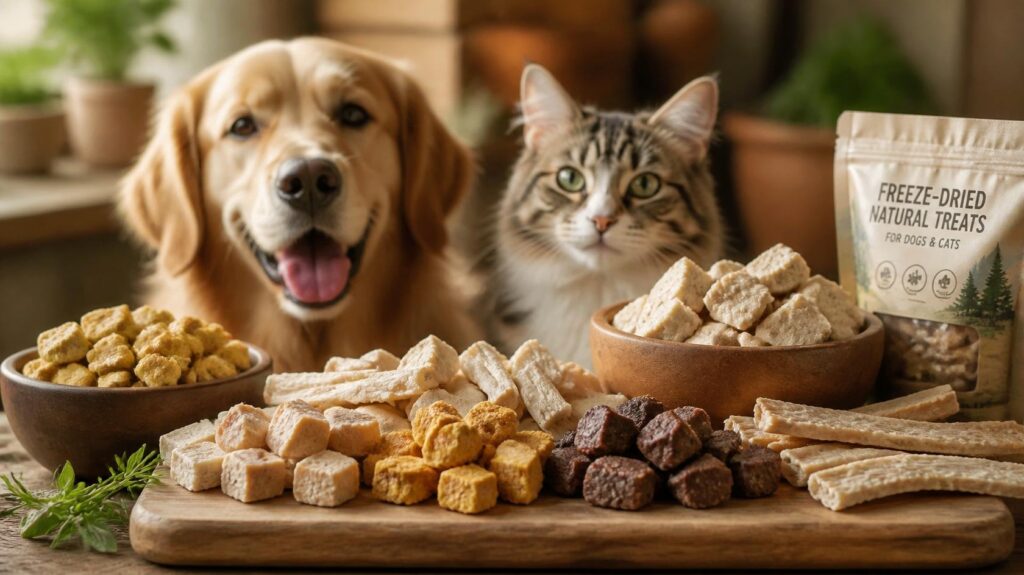
Choosing the right pet treats isn’t just about rewarding good behavior—it can meaningfully impact your pet’s nutrition, weight, dental health, and overall well-being. High-quality treats support training and enrichment without adding unnecessary fillers or risky additives. With a quick label check and a few smart criteria, you can pick treats that keep tails wagging and bodies thriving.
🥩 Key Things to Look For
- Whole, Named Ingredients – such as beef, chicken, eggs, blueberries, broccoli, goat milk, etc
- Grain Free or Whole Grains – dogs and cats don’t require grains in their diet but if you feed treats with grains look for whole grains like whole oats and whole brown rice rather than those broken down such as oat groats and rice bran
- Limited Ingredients – the fewer the ingredients the better. The more that is in treats the more likely there are unnecessary fillers.
- Ingredients you can pronounce – look for ingredients you know what they are, if you can’t pronounce it or don’t know what it is it may be best to avoid it, or at least look it up to see what it is and if there are any benefits to your pet eating it
- Fun-ctional over “Fun” – try to provide treats that actually benefit your pet rather than giving them something just to give them something. For example, do the ingredients provide pumpkin for fiber, probiotics for gut health, glucosamine for joints, omegas for healthy skin and coat, etc
- Minimal Processing – raw, freeze dried, dehydrated, air dried or home-baked are best. Try to avoid treats that are highly processed using high heats as these can alter ingredients and destroy nutrients
- No preservatives or Natural preservatives — Treats made without preservatives and those with mixed tocopherols (vitamin E) or rosemary extract can help maintain freshness without harsh chemical preservatives.
🚫 Red Flags: What to Avoid
- Problematic Additives — Ingredients like BHA, BHT, or ethoxyquin are preservatives are best to avoid due to ongoing debate about long-term exposure.
- Artificial Colors and Dyes — Dogs don’t care about bright colors, and some dyes may trigger sensitivities or add unnecessary chemicals.
- Unnamed Meat Sources — Terms like “meat meal” or “animal by-products” without a specific animal can signal inconsistent quality and unclear sourcing.
- Flavor Enhancers – watch for artificial flavorings or high amounts of salt as these are added to encourage pets to eat them but offer little to no nutritional value
- Unnecessary Fillers — the addiction of corn, wheat, or soy (especially early in the ingredient list) may add calories with limited nutritional value
- Added Sugar or Sweeteners — Added sugars can contribute to weight gain and dental issues; avoid anything with sugar, corn syrup, or similar sweeteners.
Whether you’re using treats for training or just to add something extra to your pet’s diet, look for quality treats made by trusted small businesses, companies or brands. Focus on treats with whole ingredients and less is more when it comes to the number of ingredients, especially when it comes to allergies or sensitivities.